Showing posts with label photo voltaic. Show all posts
Sunday, January 27, 2019
XINPUGUANG Flexible Solar Panels 1200w Solar Home System Kit 100w Solar Panels 12pcs Monocrystalline Solar Cell Module for Off Grid Solar Battery Charger(1200W)
DIY Solar Tracking System Inspired by NASA (Parker Solar Probe)
In this video I demonstrate a simple autonomous solar tracking system that can be used with solar panels or parabolic mirrors to improve their performance in producing renewable energy. For this system I use two 10rpm, 6v geared electric motors, and four 5v, 0.6w solar panels connected in a configuration that allows the motors to constantly move the panels into shade (purchasing links for these items below). The cost of the electronics was about $10, and could easily be scaled up or down as necessary for a variety of solar applications.
Michael Strizki's Fantastic Solar Hydrogen Home
In 2006, Mike took his home off of the electrical power grid. Ever since, he has been generating his own electricity. All of Mike's electrical power comes from solar energy. He usually generates 160 percent more energy than he needs to power his home. Mike isn't likely to sell his power to the grid. Instead, Mike uses the excess electrical power to make hydrogen, which he stores in tanks, to run his car on. Mike has proven that it is possible for you to power your home and car from solar power.
Thursday, July 6, 2017
Solar Powered LED Flood Light - Motion Detection, Weatherproof
Solar Powered Flood Light with 60 bright LEDs and PIR motion detection offers enhanced home protection and peace of mind.
Powered by the sun, this flood light offers wire-free installation and energy-saving security that works great in remote or difficult to access locations such as sheds, rooftops, detached garages, and other outdoor buildings. Made out of durable ABS plastic, this compact Flood light offers long lasting defense against the elements of nature. After dark, the unit's built-in motion detector turns the light on automatically upon detecting motion, and then turns it off after a user-defined timer setting. A perfect security device for illuminating dark alleys and sidewalks or patios and keeping unwanted visitors away.
Easy to install, this Flood light doesn’t need any kind of electric wiring. Secure it in a desired location using the included mounting piece and make sure the 2W Polycrystalline solar panel is pointed toward a sunny area to ensure maximum solar charging. After approximately 8 hours of charging, the LED Flood Light can shine another 8 hours.
The Solar Powered Flood Light is a useful addition to any outdoor security system. Order today, and we guarantee to express ship it out tomorrow. Brought to you by the leader in wholesale outdoor gadgets,
Solar Powered
60 Bright LEDs
100 Lumen
Adjustable PIR Motion detector
8 Hours battery life
Weatherproof
General
LED Type: 60 LEDs
Lumens: 100 Lumens
Solar Panel Type: Polycrystalline
Motion Detection
Day/Night Auto On/Off Switch
Weatherproof
Light Adjusting
Time Adjusting
Power Source: Built-in Battery or Solar Panel
Battery Size: 2000mAh
Battery Life: 8 Hours
Charging Time: 8-10 Hours
Solar Panel Power: 6V, 2W
Dimensions
Main product dimensions: 130x90x80 mm (L x W x D)
Main product weight: 500g
Weight/dimension is for the main item of this boxed product, to help you compare product sizes before buying: please do not base your shipping calculations on this price - shipping prices depend on your cart contents, shipping destination, and shipping method: please use the checkout to select options and preview shipping price for your total order.
Package Contents
Solar PIR Flood Light
Solar Panel
User Manual
Mounting Bracket
Ground Stake
Orders processed and shipped within 24-hours
12 month warranty
In-house QC
Award winning customer support
Worldwide Shipping
Certification: CE, FCC, RoHS
Green energy, the energy of the future, but also of the present,
Ensures the required quality and power from the sun, accumulating the day for another 8 hours
Economics, but also the satisfaction of needs
Super quality at manufacturer's price
Warranty 12 months
Saturday, August 13, 2016
High quality 3KW off grid solar power system with battery /solar panel system
Solar panel system
High quality 3KW Off grid solar power system with battery / solar panel system
3KW OFF GRID SOLAR PANEL SYSTEM DETAILS AS BELOW:
Solar Panels 20X 150W HT-P150-36 Panels
Rated Maximum Power (Pmax) 150W
Cell Type Polycrystalline
Tolerance 0- 3%
Voltage @ Pmax (Vmp) 18.50V
Current @ Pmax (Imp) 8.09A
Short Circuit Current (Isc) 8.61A
Open Circuit Voltage (Voc) 22.00V
Nominal Operating Cell Temperature 47°C ± 2°C
Panel Dimensions 1480*680*40mm
Standard Test Conditions 25°C 1.5AM ,1000W/m2
Inverter
SPEC 3000W
Wave Form
Pure sine wave
Output Voltage AC110V/ 220V
Output Frequency 50Hz/60Hz
Inverter Efficiency 90%
Output Voltage AC110V/ 220V
Working Temp., Humidity -20 ~ +70° C, 20 ~ 90% RH
Storage Temp., Humidity -20 ~ +85° C, 10 ~ 95% RH
Solar Panels 18V 150W
Inverter OFF Grid 3000W one phase
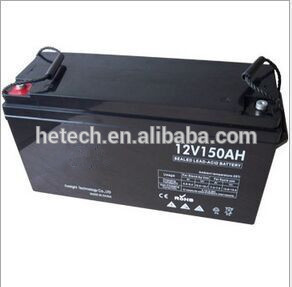
Battery 12V 150AH 8 set
Cables / PV4MM2/6MM2 1set
Solar Controller 48V 30A 1
Solar Panel Slop bracket
Alum. 1 set
Max Power Supply Capacity Reference SF-3000W Solar Panel System
Sunday, July 26, 2015
Wind-solar hybrid power-supply system
Hybrid renewable energy systems (HRES) are becoming popular as stand-alone power systems for providing electricity in remote areas due to advances in renewable energy technologies and subsequent rise in prices of petroleum products.
A hybrid energy system, or hybrid power, usually consists of two or more renewable energy sources used together to provide increased system efficiency as well as greater balance in energy supply.
A solar hybrids system , include solar-wind systems. The combination of wind and solar PV has the advantage that the two sources complement each other because the peak operating times for each system occur at different times of the day and year. The power generation of such a hybrid system is therefore more constant and fluctuates less than each of the two component subsystems.
Block diagram of a PV/wind hybrid energy system
This is the diagram, ie the working principle
It is a example of a hybrid energy system is a photovoltaic array coupled with a wind turbine.This would create more output from the wind turbine during the winter, whereas during the summer, the solar panels would produce their peak output.
Hybrid energy systems often yield greater economic and environmental returns than wind, solar, geothermal stand-alone systems by themselves.
An inverter is used to generate AC low voltage, which more typical appliances can be used with.Stand-alone photovoltaic power systems are independent of the utility grid and may use solar panels only or may be used in conjunction with a diesel generator, a wind turbine ,
For that we propose you
"Hybrid Wind and Solar Electric Systems"
Because the peak operating times for wind and solar systems occur at different times of the day and year, hybrid systems are more likely to produce power when you need it.
According to many renewable energy experts, a small "hybrid" electric system that combines home wind electric and home solar electric (photovoltaic or PV) technologies offers several advantages over either single system.
In much of the United States, wind speeds are low in the summer when the sun shines brightest and longest. The wind is strong in the winter when less sunlight is available. Because the peak operating times for wind and solar systems occur at different times of the day and year, hybrid systems are more likely to produce power when you need it.
Now in US the best price for a good quality is from 11 000$ to ,,,25 000$ , without any tracking or tower kit for wind turbine.
But if is shell by fully installed, assembled, tested and approved in the US, and when their manufacturer shall provide technical assistance, accidental repair, and periodic superior quality and standardization at a more accessible price [10 000 $ to 20 000 $],
The manufacturer will have its own station, where you can see they are operating, and providing the necessary energy users, but also creating electricity charging station, independent, for cars, motorcycles and electric vehicle development to help electric vehicles for removal carbon emissions
This is the energy of the future to replace oil and gas consumption, to defend the planet from carbon emissions, but also against the danger of "nuclear accident" as it was "Fukushima"
We want to promote this way of independently produce the energy required for home, small businesses but also for medium to large energy consumers
We are looking for investors in this idea, association or for project financing
Thursday, December 19, 2013
PSC hears presentations on solar, wind energy – The State
Solar and wind energy boosters gained attention Tuesday from an influential state board that could help decide whether alternate forms of energy expand in South Carolina, a state historically reluctant to embrace non-traditional power sources.
The S.C. Public Service Commission spent more than two hours listening to presentations and asking about the expansion of solar and wind in the Palmetto State – and when the session ended, members said they were impressed with what they heard.
“I’m sure it’s going to be extremely helpful to each of us,” PSC chairman O’Neal Hamilton said after the meeting in Columbia.
Commissioners took no action, but asked dozens of questions that could help guide them as alternative energy issues increasingly come up.
“I’m sure it’s going to be extremely helpful to each of us,” PSC chairman O’Neal Hamilton said after the meeting in Columbia.
Commissioners took no action, but asked dozens of questions that could help guide them as alternative energy issues increasingly come up.
Find the entire article here
Read more here: http://www.thestate.com/2013/12/17/3164761/psc-hears-presentations-on-solar.html#storylink=cpy
Monday, December 16, 2013
A New Material for Solar Panels Could Make Them Cheaper, More Efficient
A unique solar panel design made with a new ceramic material points the way to potentially providing sustainable power cheaper, more efficiently, and requiring less manufacturing time. It also reaches a four-decade-old goal of discovering a bulk photo voltaic material that can harness energy from visible and infrared light, not just ultraviolet light.
Scaling up this new design from its tablet-size prototype to a full-size solar panel would be a large step toward making solar power affordable compared with other means of producing electricity. It would also help the nation toward its goal of creating a national power grid that receives one-third of its power through wind and solar sources.
This affordable sun-powered future could be closer than we think thanks to early tests on this new material, which was developed by a team led by scientists at the University of Pennsylvania and Drexel University. The tests were conducted, in part, at the Advanced Photon Source housed at the U.S. Department of Energy's Argonne National Laboratory.
The team created a new class of ceramic materials that has three main benefits. First, it can produce a solar panel that is thinner than today's silicon-based market leaders by using one material to do the work of two. Second, it uses cheaper materials than those used in today's high-end thin-film solar panels. Third, the material is ferroelectric, which means it can switch polarity, a key trait for exceeding the theorized energy-efficiency limits of today's solar cell material.
Part of the reason solar panels have low efficiency is that the particles collected from the sun enter the solar cell and spread out in all directions. Getting them all to flow one direction typically requires layers of different channeling material. Each time the particles pass between these layers some get lost, decreasing the energy efficiency of the solar cell. The team's new design uses fewer layers to limit loss and uses ferroelectric material to use up less energy channeling the particles.
It took more than five years to model and design a material with this combination of properties. The material uses perovskite crystals made with a combination of potassium niobate and barium nickel niobate. It has shown significant improvement over today's classic ferroelectric material. The new material can absorb six times more energy and transfer a photocurrent 50 times denser. Further tuning of the material's composition should expand efficiency, the scientists say.
"This family of materials is all the more remarkable because it is composed of inexpensive, non-toxic and earth-abundant elements, unlike compound semiconductor materials currently used in efficient thin-film solar cell technology," said Jonathan Spanier, a team member from Drexel's Department of Materials Science and Engineering.
The work is outlined in a paper "Perovskite oxides for visible-light-absorbing ferroelectric and photovoltaic materials" published last month in the journal Nature.
The researchers used X-ray crystallography and powder diffraction at Sector 11 of the APS to ensure the material had the crystal structure and symmetry they intended. This instrument and its unique mail-in program afford convenient and rapid access to the highest-resolution powder diffraction data available in North America, providing a very detailed and accurate picture of this ceramic material's atomic structure.
Using a suite of experimental tools, the research team demonstrated the material's ability to move energy in one direction without crossing layers, thus minimizing energy loss. This ability called bulk photovoltaic effect has been known since the 1970s but, until now, was only observable in ultraviolet light, and most of the energy from the sun is in the visible and infrared spectrum.
By adjusting the percentages of component elements in this new material, the research team demonstrated that they can reduce the amount of energy needed to induce conduction, a level called bandgap.
"The parent material's bandgap is in the UV range," Spanier said, "but adding just 10 percent of the barium nickel niobate moves the bandgap into the visible range and close to the desired value for efficient solar-energy conversion."
This affordable sun-powered future could be closer than we think thanks to early tests on this new material, which was developed by a team led by scientists at the University of Pennsylvania and Drexel University. The tests were conducted, in part, at the Advanced Photon Source housed at the U.S. Department of Energy's Argonne National Laboratory.
The team created a new class of ceramic materials that has three main benefits. First, it can produce a solar panel that is thinner than today's silicon-based market leaders by using one material to do the work of two. Second, it uses cheaper materials than those used in today's high-end thin-film solar panels. Third, the material is ferroelectric, which means it can switch polarity, a key trait for exceeding the theorized energy-efficiency limits of today's solar cell material.
Part of the reason solar panels have low efficiency is that the particles collected from the sun enter the solar cell and spread out in all directions. Getting them all to flow one direction typically requires layers of different channeling material. Each time the particles pass between these layers some get lost, decreasing the energy efficiency of the solar cell. The team's new design uses fewer layers to limit loss and uses ferroelectric material to use up less energy channeling the particles.
It took more than five years to model and design a material with this combination of properties. The material uses perovskite crystals made with a combination of potassium niobate and barium nickel niobate. It has shown significant improvement over today's classic ferroelectric material. The new material can absorb six times more energy and transfer a photocurrent 50 times denser. Further tuning of the material's composition should expand efficiency, the scientists say.
"This family of materials is all the more remarkable because it is composed of inexpensive, non-toxic and earth-abundant elements, unlike compound semiconductor materials currently used in efficient thin-film solar cell technology," said Jonathan Spanier, a team member from Drexel's Department of Materials Science and Engineering.
The work is outlined in a paper "Perovskite oxides for visible-light-absorbing ferroelectric and photovoltaic materials" published last month in the journal Nature.
The researchers used X-ray crystallography and powder diffraction at Sector 11 of the APS to ensure the material had the crystal structure and symmetry they intended. This instrument and its unique mail-in program afford convenient and rapid access to the highest-resolution powder diffraction data available in North America, providing a very detailed and accurate picture of this ceramic material's atomic structure.
Using a suite of experimental tools, the research team demonstrated the material's ability to move energy in one direction without crossing layers, thus minimizing energy loss. This ability called bulk photovoltaic effect has been known since the 1970s but, until now, was only observable in ultraviolet light, and most of the energy from the sun is in the visible and infrared spectrum.
By adjusting the percentages of component elements in this new material, the research team demonstrated that they can reduce the amount of energy needed to induce conduction, a level called bandgap.
"The parent material's bandgap is in the UV range," Spanier said, "but adding just 10 percent of the barium nickel niobate moves the bandgap into the visible range and close to the desired value for efficient solar-energy conversion."
Subscribe to:
Posts (Atom)